
Bhagavad-Gita Chapter 15, Verse 5
Surrender & Divine Association
निर्मानमोहा जितसङ्गदोषा
अध्यात्मनित्या विनिवृत्तकामा: ।
द्वन्द्वैर्विमुक्ता: सुखदु:खसंज्ञै-
र्गच्छन्त्यमूढा: पदमव्ययं तत् ॥ ५ ॥
nirmāna-mohā jita-saṅga-doṣā
adhyātma-nityā vinivṛtta-kāmāḥ
dvandvair vimuktāḥ sukha-duḥkha-saṁjñair
gacchanty amūḍhāḥ padam avyayaṁ tat
Understanding the Verse
Synonyms - niḥ — without, māna — false prestige, mohāḥ — illusion, jita — conquered, saṅga-doṣāḥ — faults of association, adhyātma-nityāḥ — fixed in spiritual knowledge, vinivṛtta-kāmāḥ — free from lust, dvandvaiḥ — from dualities, vimuktāḥ — liberated, sukha-duḥkha-saṁjñaiḥ — called happiness and distress, gacchanti — attain, amūḍhāḥ — unbewildered, padam — the state, avyayam — eternal, tat — that
Translation - A person who is without false prestige, free from illusion or attachment that blinds you, who has conquered the faults that come from material association, who is steady in spiritual understanding, free from lust, and beyond the dualities of happiness and distress — such an unbewildered person becomes liberated and reaches that eternal state.
Purport from our great Acharyas - The surrendering process begins when a person gives up pride. Pride creates the illusion that we are the controllers of life. A person who expects honor from the world cannot truly surrender to God. Pride is foolish because we stay here only briefly yet think we own everything. This illusion complicates life and keeps us in constant trouble.
Thinking we own the land or the world is another form of this false idea. When we drop this false ownership, we become free from many false attachments. With these illusions gone, real spiritual knowledge can finally grow. True understanding frees us from the dualities of happiness and distress.
In this purified state, surrender to the Supreme becomes natural and effortless.
Simple Translation - Here Lord Shri Krishna says that "Someone who is humble, clear‑minded, spiritually steady, free from lust and dualities, becomes liberated and reaches the eternal spiritual state of being the eternal servant of the Creator, Lord Shri Krishna."
Let’s explore this shloka more deeply and understand how it applies to your everyday life.
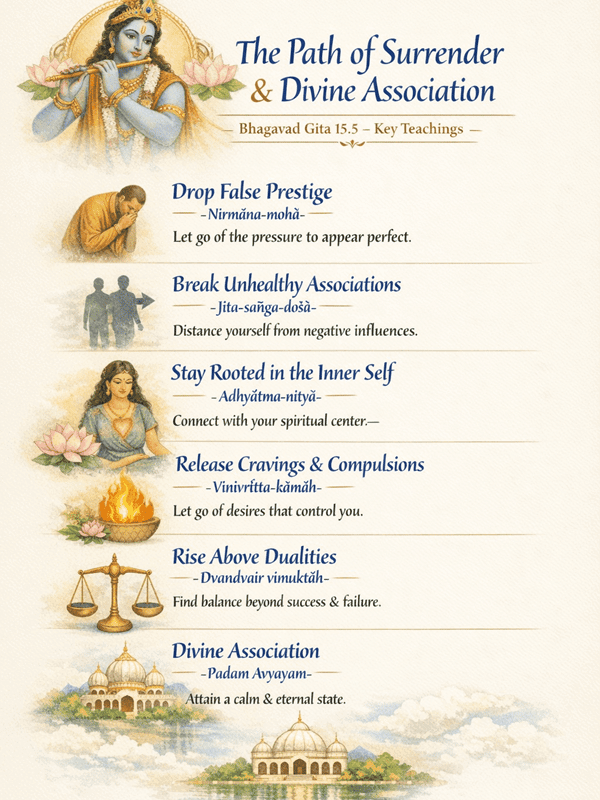
- Let go of false prestige When you stop trying to look important or prove yourself, life becomes lighter. Example: You don’t argue just to be right — you choose peace.
- Reduce attachment (moha) Attachment blinds you and creates unnecessary pain. Example: When someone doesn’t message back, you don’t panic or overthink.
- Avoid negative associations The people and habits around you shape your mind. Example: Spending less time with gossiping or complaining groups.
- Stay steady in spiritual understanding A few minutes of reading, chanting, or reflection keeps your mind centered. Example: Starting your day with one verse instead of scrolling your phone.
- Control desires instead of being controlled by them Freedom comes when cravings don’t dictate your actions. Example: Choosing discipline over impulse eating or impulse buying.
- Rise above dualities Life will bring both comfort and discomfort — don’t let either shake you. Example: Staying calm whether someone praises you or criticizes you.
- Become unbewildered and peaceful When your mind is clear and balanced, you naturally move toward the eternal spiritual state. Example: You respond thoughtfully instead of reacting emotionally.
If you are serious about connecting with the Lord and making your life peaceful, please chant this sloka daily as a reminder. This will help you develop the qualities of a surrendered soul.
Like this post – Please Share the poster with others!
Our aim is to promote physical, mental, and spiritual well-being for everyone. In a world filled with distractions, we want to guide you on a journey inward.
Help us Spread The Word - Wellness To All
Please help us spread this website which is a means to receive the mercy of Bhakti Acharya's Gurus the pure representatives of the Supreme Lord.
Let's share and Please the Supreme Lord Who says in Bhagavad Gita Chapter 18 Verse 68 - "For one who explains this supreme secret to the devotees, pure devotional service is guaranteed, and at the end he will come back to Me." (Bg 18.68)
Featured Topics Related to Spiritual Wellness

Bhakti Yoga
Find Inner Peace and Wellness through the Path of Loving Devotion
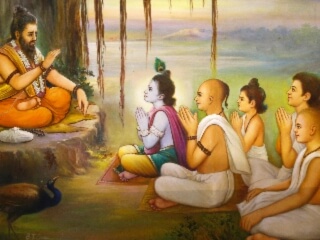
Bhakti Gurus
Prepare to be uplifted, inspired, and transformed as the stories of Real Bhakti Heros illuminate the path to inner peace and inner well-being.

Guru Vani
Are you ready to unlock the ancient wisdom, through the profound teachings of our Bhakti Gurus? Let the Guru Vani - Words of Wisdom guide you to lasting inner peace and empowerment.